
When designing photography equipment, understanding CNC bending’s role is essential. This technology provides unmatched precision, ensuring that each component fits perfectly. It also offers customization, allowing you to create unique shapes tailored to your artistic vision. Additionally, the cost-effectiveness of CNC bending reduces material waste and enhances production efficiency. As you explore these advantages, consider how they can transform your photography gear and elevate your work.
Key Takeaways
- CNC bending ensures precise shaping, enhancing the structural integrity and functionality of photography equipment.
- It minimizes human error, maintaining tight tolerances crucial for optimal performance and stability.
- Customization capabilities allow for unique designs that cater to specific photographer needs and preferences.
- Cost-effectiveness of CNC bending reduces material waste and lowers production expenses while fostering innovation.
- The technology supports lightweight, portable gear development, enhancing mobility and usability in various photography settings.
What Is CNC Bending and How Is It Used in Photography Equipment?
CNC bending, a process that utilizes computer numerical control technology, has become essential in the design of photography equipment. So, what is CNC bending? It refers to the precise shaping of metal components through automated machines, allowing for intricate designs that meet strict tolerances. In photography equipment, you often find CNC bending used in the creation of sturdy camera mounts, light stands, and tripod legs. This method guarantees that each part is consistently manufactured, enhancing durability and functionality. By employing CNC bending, you gain access to complex geometries that traditional bending methods can’t achieve. Ultimately, this technology empowers designers to push boundaries, creating equipment that not only performs well but also resonates with your artistic vision.
Why CNC Bending Matters for Photography Equipment Design
While you might not realize it, the structural integrity and functionality of photography equipment heavily rely on the precision offered by CNC bending. This advanced manufacturing technique guarantees that each component is shaped with exact measurements, which is vital for achieving peak performance. In photography, even minor deviations can lead to misalignment or instability, affecting both image quality and user experience. CNC bending allows designers to create complex shapes and contours, accommodating innovative features while maintaining strength and durability. This capability supports the development of lightweight, portable gear that photographers need, enhancing mobility without sacrificing quality. Ultimately, CNC bending is essential for crafting reliable equipment that meets the high standards of today’s photography enthusiasts and professionals alike.
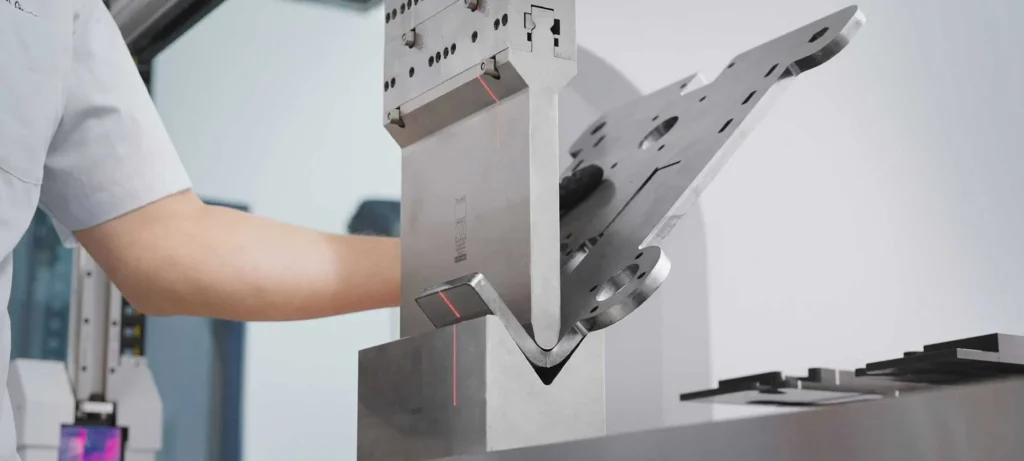
Precision Benefits of CNC Bending
When it comes to designing photography equipment, precision is non-negotiable, as even the slightest error can compromise performance. CNC bending offers unparalleled accuracy, ensuring that each component fits perfectly within the assembly. This technology utilizes computer numerical control to execute precise angles and dimensions, minimizing human error. You’ll appreciate how CNC bending maintains tight tolerances, which is essential for structural integrity and functionality. By reducing discrepancies, it allows for smoother operation of parts, enhancing the overall user experience. Furthermore, this level of precision means that you can trust your equipment under various conditions, from studio shoots to outdoor sessions. Ultimately, CNC bending empowers you to achieve the exact specifications necessary for high-quality photography equipment.
How CNC Bending Allows Photographers to Customize Their Equipment
By leveraging the capabilities of CNC bending, photographers can tailor their equipment to meet specific needs and preferences. This process allows you to create unique shapes and angles that traditional manufacturing methods may not achieve. With CNC bending, you can customize components like brackets, mounts, or supports, ensuring they fit seamlessly into your workflow. The precision of CNC technology means every piece is crafted to exact specifications, enhancing functionality and improving overall performance. Additionally, you can experiment with materials and finishes, giving your gear a personalized touch that reflects your style. Ultimately, CNC bending empowers you to design equipment that enhances your creative vision, making your photography experience more fulfilling and aligned with your artistic intentions.
Cost-Effectiveness of CNC Bending in Photography Equipment Production
As you consider the cost-effectiveness of CNC bending in photography equipment production, you’ll find that it offers significant savings over traditional manufacturing methods. CNC bending minimizes material waste by utilizing precise calculations, ensuring that every piece counts. This accuracy reduces the need for costly rework and excess inventory, translating to lower overall expenses. Additionally, its automation speeds up the production process, which means you can produce more equipment in less time, ultimately increasing productivity. With CNC bending, you also benefit from the ability to create complex shapes without incurring extra costs, making it easier to innovate. By incorporating CNC bending, you align quality with affordability, empowering your designs to meet both budget and performance requirements effectively.
Conclusion
Incorporating CNC bending in photography equipment design markedly enhances precision, customization, and cost-effectiveness. This technology not only guarantees that your gear fits seamlessly but also allows for unique shapes that meet your artistic vision. By minimizing material waste, it contributes to more sustainable production practices. Ultimately, CNC bending empowers you to create high-quality, lightweight equipment that elevates your photography experience, making it an essential choice for any serious photographer looking to optimize their tools.
You May Also Like To Read: